White Papers & Reports
Yale Forest Forum welcomed over 2,200 registered attendees to the speaker series “Frontiers in Forest Carbon Crediting” in fall 2025. The series focused on forest carbon accounting and crediting, exploring key scientific, economic, and policy challenges such as additionality, baselines, permanence, and measurement, while highlighting emerging solutions and perspectives from researchers, carbon credit developers, and finance and policy stakeholders. The series was co-developed and co-hosted by The Forest School at the Yale School of the Environment, the Yale Applied Science Synthesis Program, The Nature Conservancy, SE Advisory Services, and The Climate Trust.
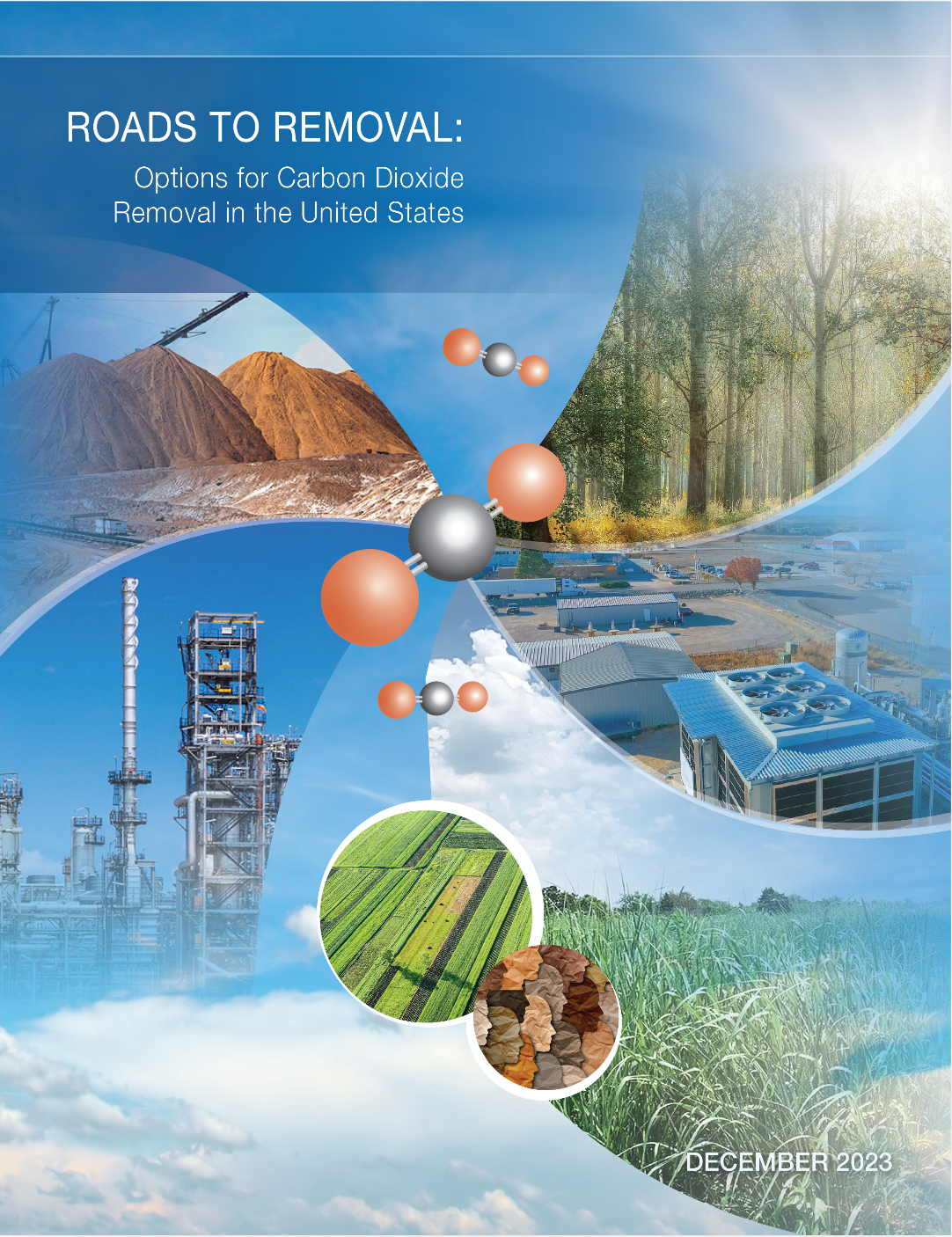
There is an urgent need to remove carbon dioxide (CO2) from the atmosphere to ensure climate security and resilience. In 2022, the United States set a goal of developing carbon dioxide removal (CDR) pathways that will remove CO2 from the atmosphere and store it at the gigaton scale (at least a billion tonnes per year). Alongside the larger national goal of rapidly reducing current greenhouse gas emissions (GHG), CDR provides a vital option for achieving net-zero emissions by 2050.
The Roads to Removal (R2R) report is a national collaborative effort by more than 68 scientists, and 13 institutions that examines regionally specific opportunities to address the pressing issue of climate change and the urgent need to remove carbon dioxide (CO2) from the atmosphere and store it at the gigaton scale.
The Yale Applied Science Synthesis Program led the research in Chapter 2: Forest Management for Carbon Removal and Storage that highlighted three regional opportunities for improved forest management and reforestation for climate mitigation.
YFF welcomed over 3,300 registered attendees to the speaker series “Conserving Mature and Old-Growth Forests in a Changing Climate” in fall 2024. The series focused on responses to and discussions about mature and old-growth forests, including as mandated by Executive Order 140752 and the National Old-Growth Amendment, and featured perspectives from the United States Forest Service, Tribal nations, private forest owners, forest industry, academia, and forest advocacy organizations. The series was co-developed and co-hosted by The Forest School at the Yale School of the Environment, the Yale Applied Science Synthesis Program, the Yale Center for Natural Carbon Capture, and the Society of American Foresters.
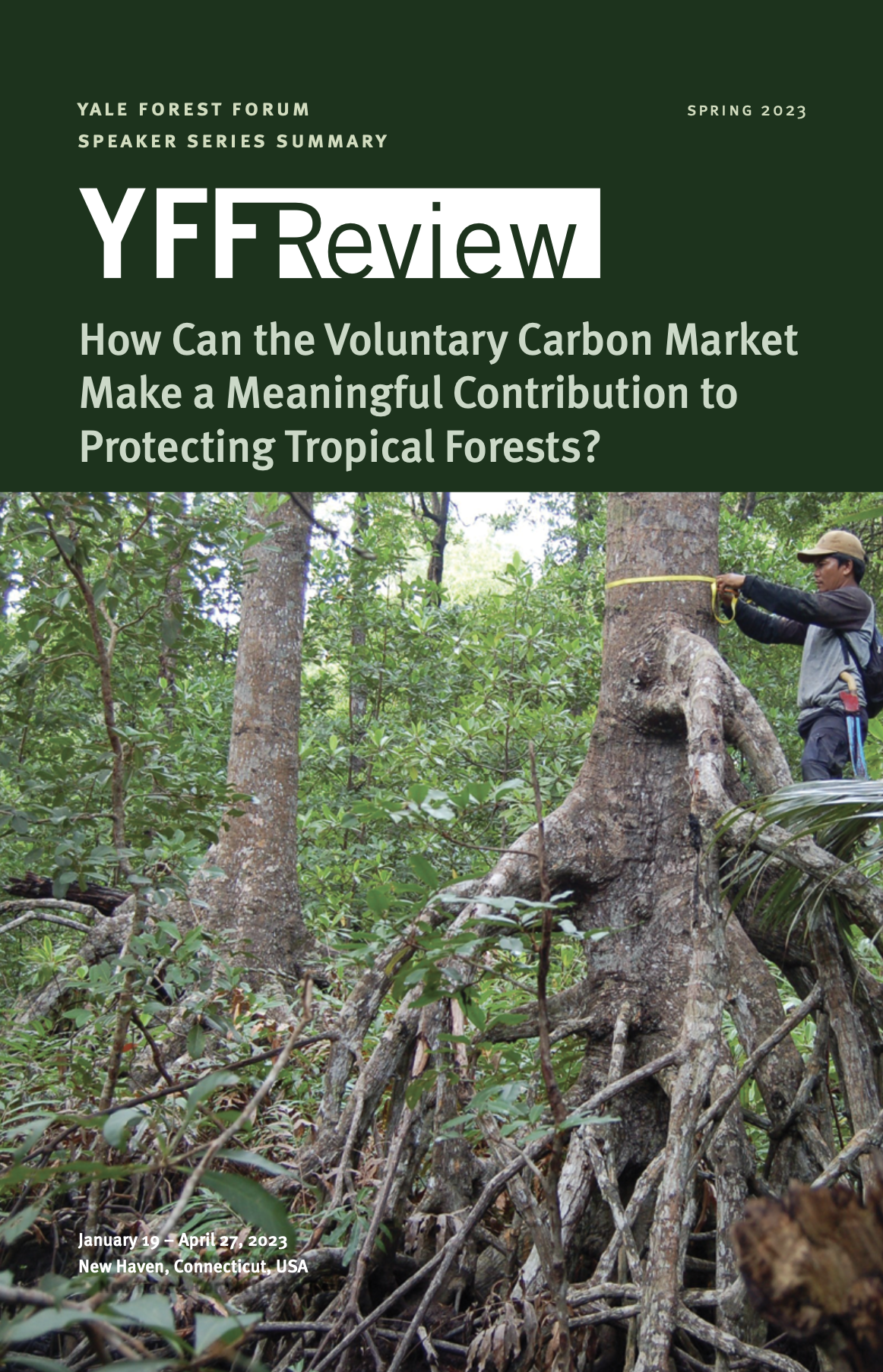
YFF welcomed over 800 registered attendees to the speaker series “How Can the Voluntary Carbon Market Make a Meaningful Contribution to Protecting Tropical Forests?” in spring 2023. The series focused on the issues facing tropical forest carbon crediting and featured a wide range of experts from perspectives including tropical country governments, Indigenous peoples, buyers, standard setters, and project developers. This series was hosted by the Yale Applied Science Synthesis Program, Yale Center for Business and the Environment, and The Forest School at the Yale School of the Environment.
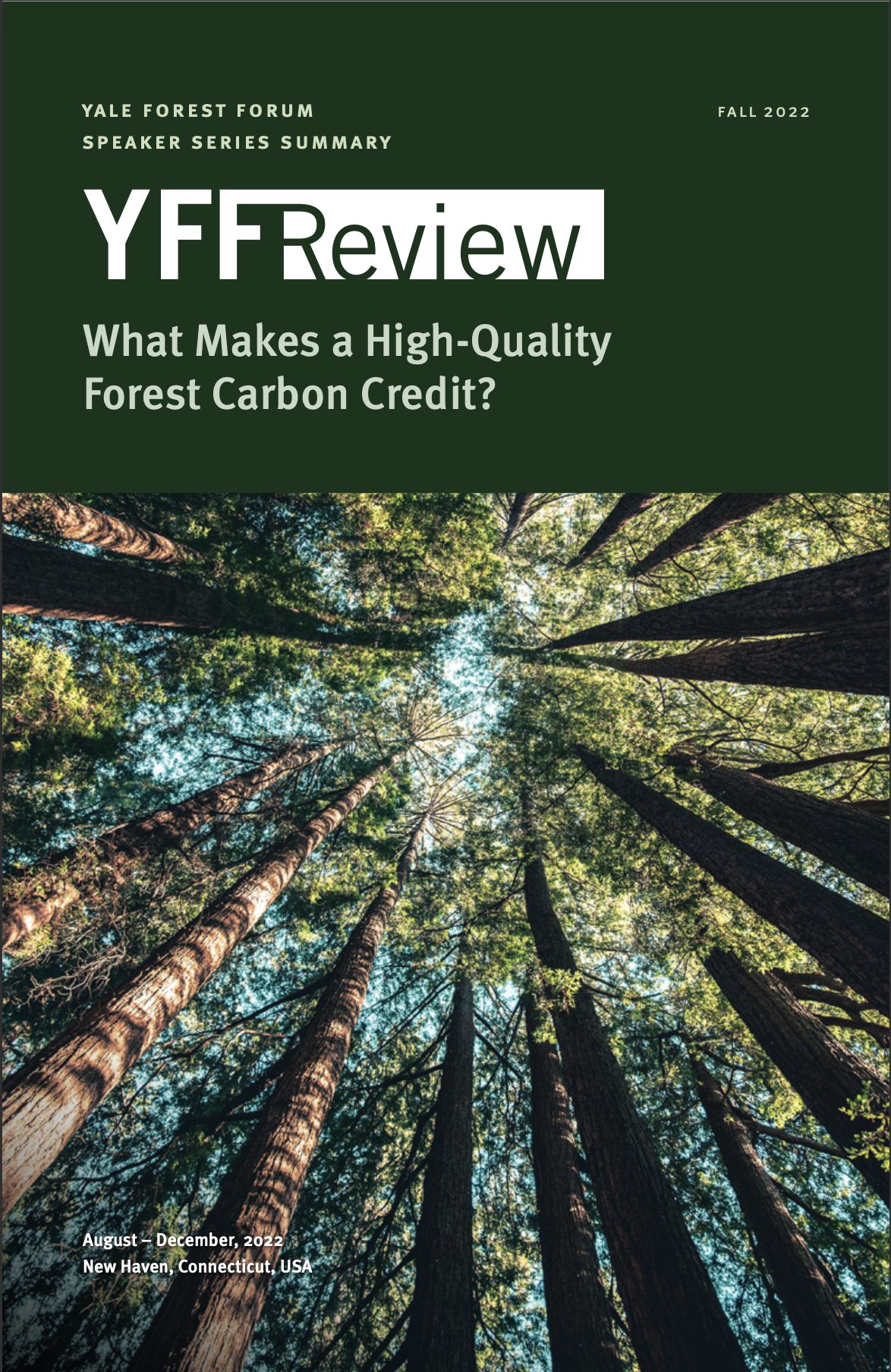
In fall 2022, YFF welcomed over 800 registered attendees to the speaker series “What Makes a High-Quality Forest Carbon Credit?” The series focused on forest carbon credits in the United States, including project development, the function of the voluntary carbon market, and the sale and use of credits as offsets. The series was organized by The Forest School at the Yale School of the Environment, Yale Center for Natural Carbon Capture, and the Yale Applied Science Synthesis Program.